| Biology
141
Lewis & Clark College |
|
K.E. Clifton |
Pollutants in the atmosphere can have global impacts
Industrial pollutants and acid rain
CFC emissions and Ozone depletion
Greenhouse gasses and climate change
First, a bit about the atmosphere:
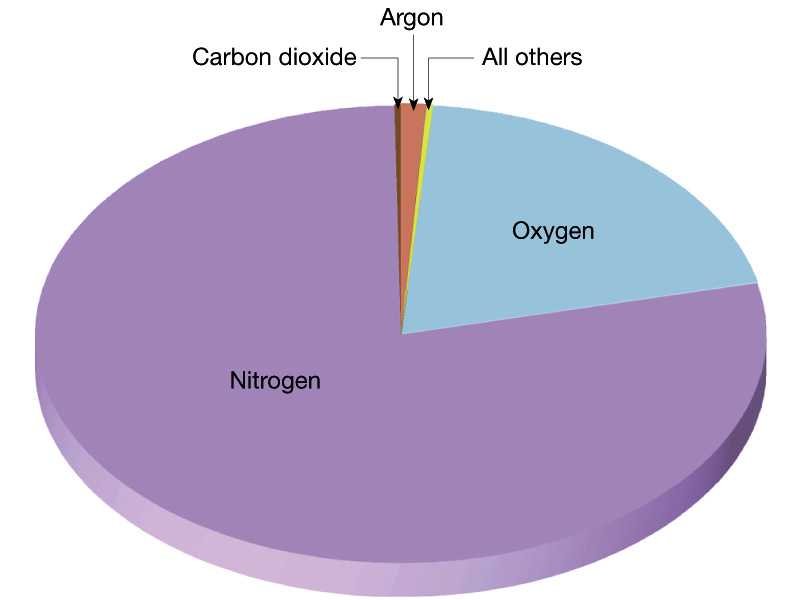
It is mostly Nitrogen, with about 20 % Oxygen and very little of lots of other elements.
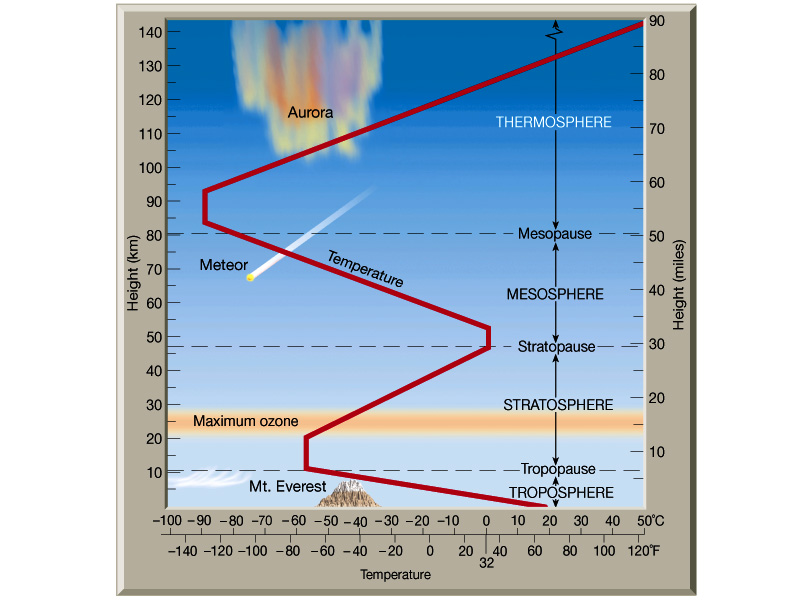
Much of the planet's temperature profile is linked to the composition of our atmosphere
Like water, it is stratified, with patterns of thermal structure
In addition to providing the gas needed for respiration (O2), the atmosphere plays a critical role in regulating Earth's climate.
Acid Rain: Industrial emissions change the pH of rainfall
The worst offender: sulfer dioxide (SO2)
Other relevant pollutants nitric oxide (NO), nitrogen dioxide (NO2), chloride (Cl -)
These combine to form Sulfuric Acid (H2SO4) and Nitric Acid (HNO3)
Emmission controls have worked to reduce the impact of acid rain in regions like the American Northeast
Ozone in the atmosphere absorbs UV radiation
Ozone depleting substances: chloroflourocarbons (CFCs)
Bans on CFC emmissions have been implemented to reduce ozone depletion... but is it working?
Now, more on climate, the atmosphere, and global warming
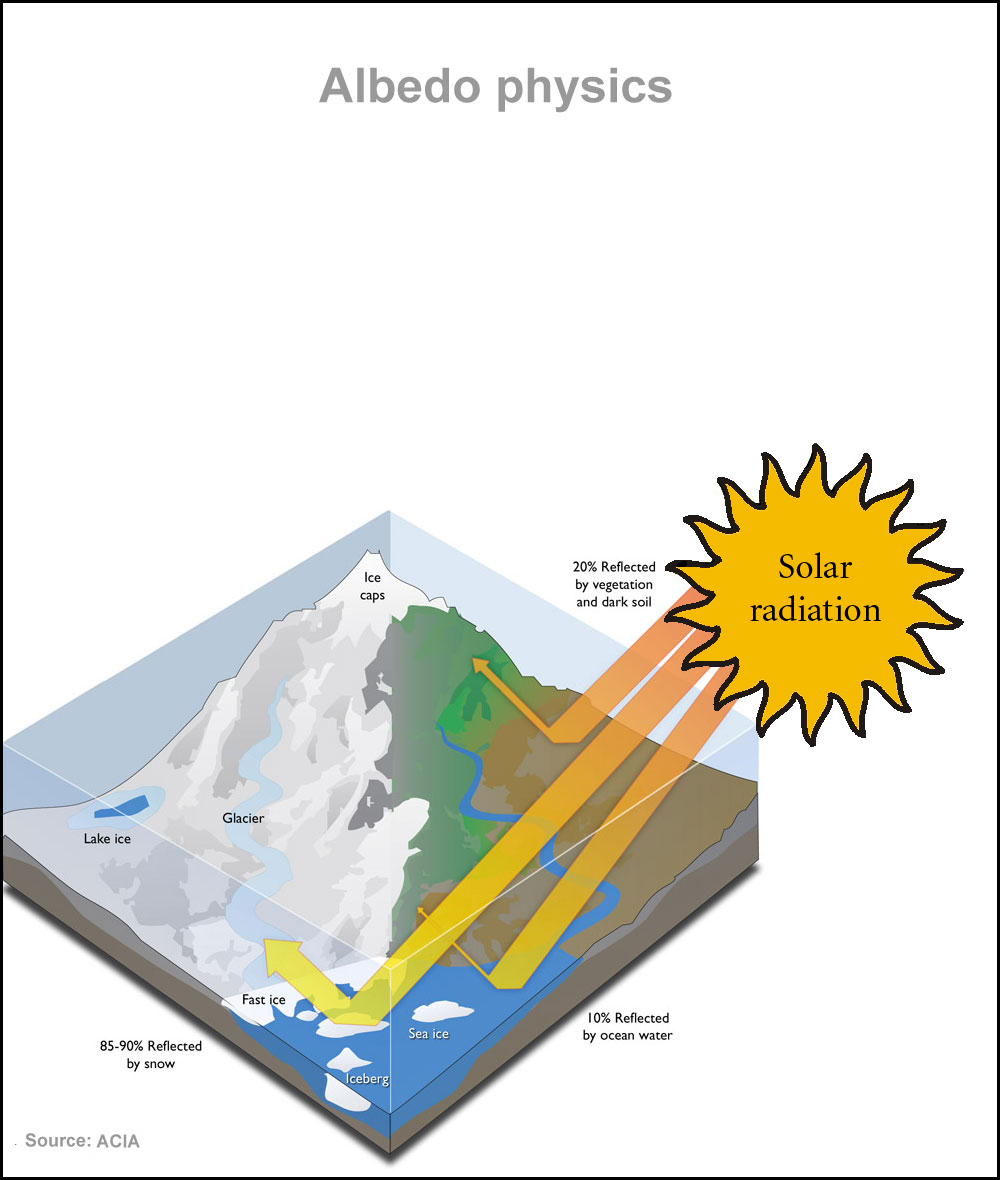
Reflection (albedo) and absorption of light energy in the atmosphere and on the surface dictate patterns of warming and cooling
The planet goes through natural cycles of warming and cooling:
Ice ages
Global Warming
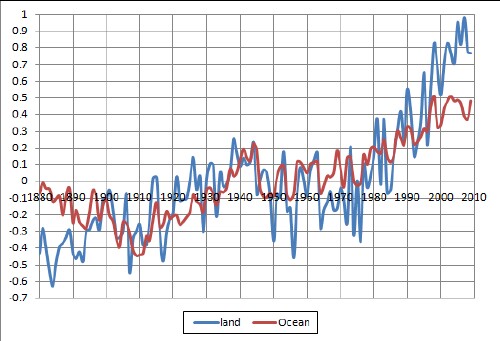
There is clear evidence that the planet is currently in a period of warming
This is recent.... what about more historical patterns?
Where do such data come from?
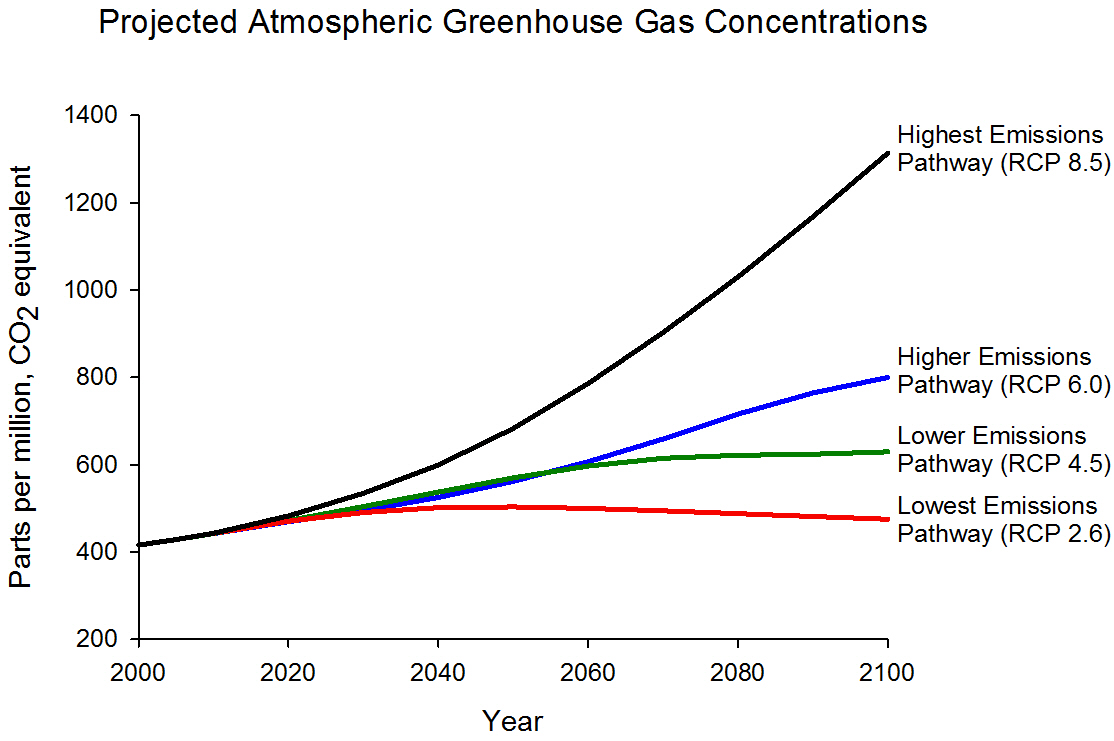
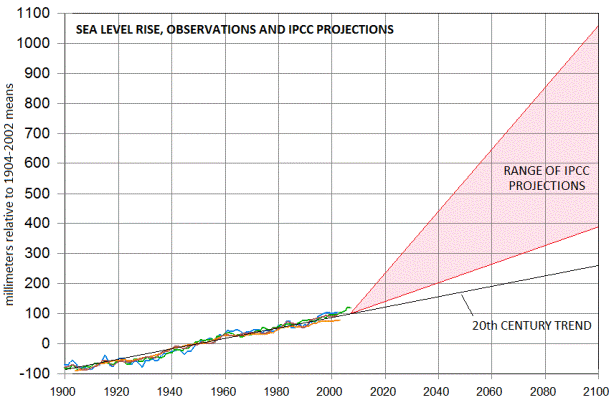
Projections for the future vary, depending on the model used
Why does warming occur?
Thank goodness for the "greenhouse effect"
The burning of fossil fuels contributes to global warming and climate change
And the levels of CO2 are rising
What are the potential consequences of global warming/climate change?
On land
Shifts in patterns of primary productivity (good for agriculture in some places... bad in others)
More variance in local weather patterns and associated ecological impacts
Changing phenology (timing and amount) of reproduction by different species.
In the oceans
Thermal expansion
Ice melt
Shifts in global circulation patterns
Acidification - Here is a link to a whole lecture on this topic
pH influences the relative proportions of carbonate and bicarbonate
What does this mean for marine organisms like corals that use calcium carbonate (CaCO3) for support structures?
.